Detailing
Build a Rinseless Wash Kit Around Your Actual Workload
The Cen-Tex Counter · Nov 18, 2026 · 9 min read
Plan supplies, towel availability and concentrate purchases with a workload worksheet, consumption examples and a realistic replenishment trigger.
A useful rinseless kit is a small working system, not just a large bottle and a bucket. It should let you complete the intended job, keep clean supplies separate from used ones and reset for the next vehicle without improvising. The most economical kit is not necessarily the one with the lowest first receipt. It is the one whose contents fit the work you can actually perform.
Start with the service and the space, then size the inventory. The examples below are hypothetical planning exercises, not Cen-Tex test results, product prices or guaranteed savings. Replace their assumptions with your own records before making a purchasing decision.
Define a complete job before listing equipment
Write down what your rinseless service includes and excludes. Exterior maintenance, wheels, interior work and a full decontamination service are not interchangeable workloads. A product shared across tasks does not make the equipment, dilution or consumption identical.
Note where water is measured, where clean materials are stored and how used textiles return for cleaning. For mobile work, include what happens when the location or vehicle is unsuitable for the planned method. A kit that only works under an ideal set of assumptions needs a decision rule for the nonideal day.
The rinseless workflow guide covers assessment and section-by-section organization. Use it to define the process before trying to optimize the number of items carried.
Inventory the kit by function
Build a checklist that follows the job rather than the store aisle:
- Identify and measure: the selected product, readable instructions, suitable mixing container and measuring tool.
- Wash: clean media appropriate to the process and enough replacements for the expected work.
- Dry: clean drying towels available before the first section is started.
- Separate: designated storage for clean supplies, used textiles and wheel-specific tools.
- Reset: a return route for laundry, a way to inspect supplies and a place to record consumption.
Add equipment only when you can explain its role. A backup measure can prevent a lost cup from disrupting the day; several duplicate accessories with no defined task may simply occupy storage. Keep required protective equipment and handling information accessible according to the products used.
Make clean-towel availability a capacity calculation
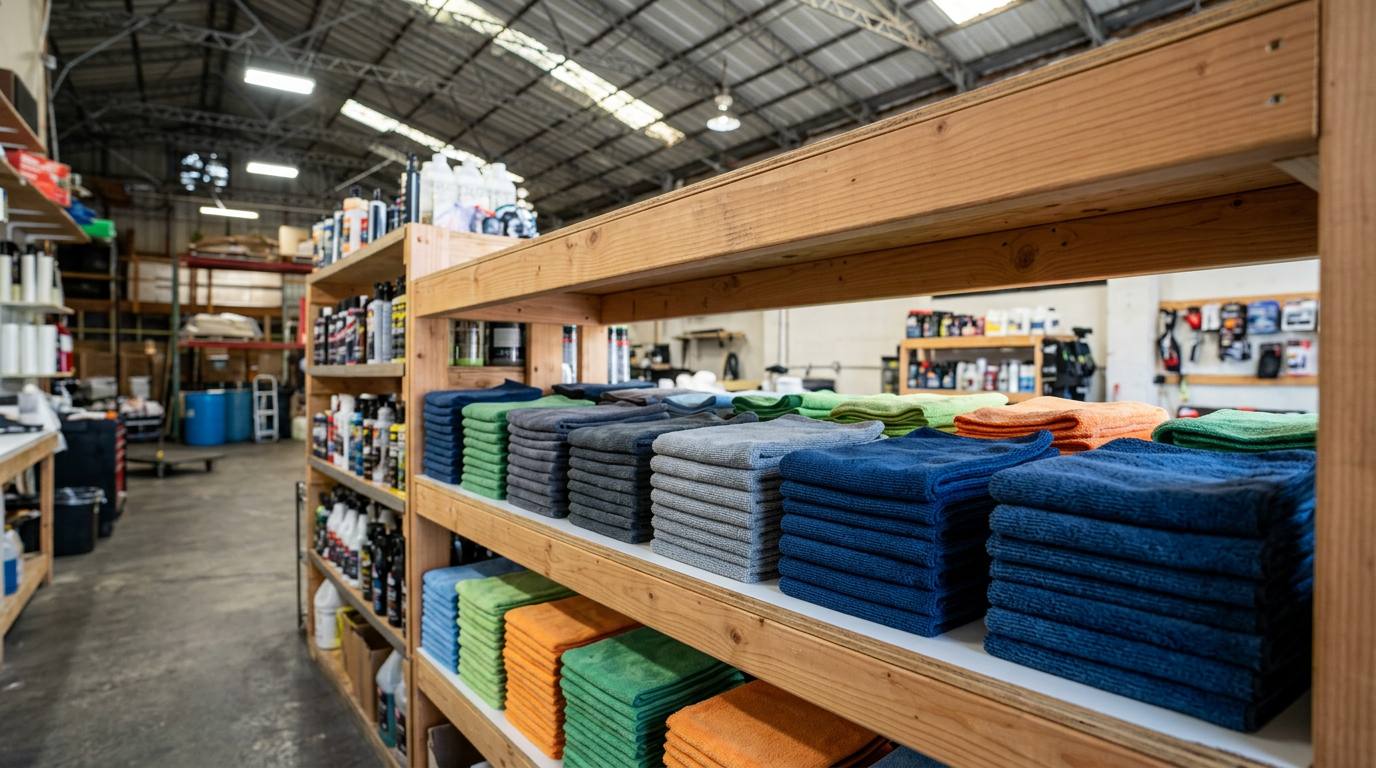
Count towels by task and condition, not just total ownership. A cabinet containing many towels may still lack enough suitable clean drying towels. Dirty, damp, damaged or task-inappropriate towels do not belong in the ready-to-use count.
For a hypothetical planning exercise, suppose records show that a particular service uses 6 wash towels and 2 drying towels. If 3 jobs occur before clean laundry returns, the working requirement is 18 wash towels and 6 drying towels. If the shop chooses a 25% reserve, rounding up separately gives 23 wash towels and 8 drying towels.
Those are inventory calculations, not recommended towel counts for every vehicle. Different media or processes require different inputs. Our microfiber care guide addresses task separation and inspection; a stock calculation does not make an unsuitable towel safe to use.
Recognize the constraint before buying more chemical
Imagine that the same shop owns 24 suitable wash towels but only 4 suitable drying towels ready for use. Under the hypothetical assumptions above, wash towels support 4 jobs while drying towels support only 2. Buying another bottle of concentrate does not remove that bottleneck.
The practical choices could include scheduling laundry earlier, obtaining more appropriate drying towels or reducing the jobs accepted before the reset. Which option works depends on space, staffing and the actual process. Do not compensate by pushing contaminated or saturated textiles beyond their useful condition.
This is why kit planning should consider the whole cycle. Preparation, washing, drying and reset each need sufficient capacity; the smallest available capacity limits what the complete system can reliably support.
Keep a consumption log that distinguishes preparation from use
For each session, record the product, concentrate measured, batch size, completed work and any discarded mixture. Add a brief reason for extra batches or waste. Do not combine different formulas into one generic ONR total if their uses differ.
A simple log can use these fields: date, service type, jobs completed, concentrate prepared, known concentrate spilled, leftover-mixture disposition and unusual conditions. The aim is not paperwork for its own sake. It is to distinguish normal demand from a one-time spill or an oversized batch prepared for a canceled appointment.
For mixing calculations, use the dilution guide and the actual product label. The inventory log records what happened; it does not authorize changing the recipe to achieve a lower number.
Reconcile the bottle with the written record
A periodic concentrate check uses a straightforward relationship: opening quantity plus receipts minus closing quantity equals quantity no longer in inventory. Use consistent units and account for transfers between storage and working containers without counting them as consumption twice.
Suppose a hypothetical week starts with 40 fluid ounces, receives another 32 and ends with 49. The decrease available to explain is 23 fluid ounces. If the preparation log accounts for 20 and a documented spill accounts for 1, there are 2 fluid ounces left to investigate.
That difference does not prove misuse. It could reflect rough inventory readings, an omitted batch or a recording error. The value of reconciliation is finding a question worth checking, not assigning blame from an imprecise bottle mark.
Convert consumption into coverage, carefully
If your own records show a stable use of 2 fluid ounces per workday, a 32-fluid-ounce quantity covers 16 such days and 128 covers 64. These are division results, not dose recommendations or guaranteed shelf life. They assume the same workload and no additional losses.
Now suppose workload changes and measured daily use rises to 4 fluid ounces. The same quantities cover 8 and 32 days. The bottle did not become less efficient; the underlying demand changed.
Use a representative period rather than a single unusually easy day. Separate busy periods from quiet ones when planning. A realistic range can be more useful than an apparently precise average that combines personal weekend washes and a full commercial schedule.
Choose a purchase size with cash and usable storage in mind
A larger container may have a different unit price, but compare the current selected variants rather than assuming the biggest is cheapest. Consider how long it will take to use the quantity, where it will be stored and the manufacturer's storage guidance. Do not invent a shelf-life deadline from a purchasing spreadsheet.
For an occasional user, a smaller quantity can reduce cash tied up in inventory and simplify handling. For steady documented demand, larger packaging may reduce the frequency of replenishment. Neither choice is universally correct.
Before ordering, subtract usable stock already on hand and confirmed incoming quantities from the amount needed for the planning period. Do not count an unconfirmed future order as available inventory.
Define which stock is ready for use and which is being held as reserve. If both disappear into an unlabeled storage area, staff may reorder unnecessarily or discover the shortage too late. Assign one place to record receipts and one person to verify the count before ordering. When a container moves into the working kit, record the transfer rather than treating the unopened shelf alone as the complete inventory.
Calculate chemical cost without confusing it with service cost
As a clearly fictional price example, a 32-fluid-ounce container costing $24 has a concentrate cost of $0.75 per fluid ounce. If measured use is 1.5 fluid ounces for a particular job, the chemical cost is $1.125, or about $1.13 when rounded for reporting. These are not Cen-Tex prices or an ONR application dose.
The result excludes labor, towels, laundry, water, equipment and other costs. Decide whether delivery and tax belong in your internal landed-cost calculation, then apply that policy consistently. Do not compare a tax-inclusive figure for one purchase with a product-only figure for another.
Round the reporting result, not every intermediate step. Keeping the underlying unit-cost calculation intact makes later comparisons easier when a price or package size changes.
Use a replenishment trigger rather than a last-minute guess
A simple planning rule is expected consumption during replenishment lead time plus a chosen reserve. The reserve represents your tolerance for variability; it is not a guarantee against shortages.
For illustration, assume 2 fluid ounces of daily demand, a verified 3-day replenishment interval and a chosen reserve of 4 fluid ounces. The reorder trigger is 2 × 3 + 4 = 10 fluid ounces. These hypothetical timing assumptions are not a promise of Cen-Tex availability or delivery speed.
If demand doubles, revisit the calculation rather than leaving the old trigger in place. Check the pickup and eligible local-delivery policy and confirm the specific order before arranging work around its arrival.
Review the kit after a representative run
Ask what actually interrupted work. Was it a shortage of towels, a measurement problem, an unsuitable location or an unclear product choice? Fix the observed constraint before adding equipment based on a theoretical ideal setup.
Compare records by similar service types. A larger or more heavily soiled vehicle may not belong in the same planning group as a routine maintenance wash. Update estimates when the service menu changes, and document why you changed them so the next review has context.
Keep decisions reversible where possible: trial a manageable purchase, record use and then decide whether more stock is justified. That provides evidence without pretending that every shop will follow the same pattern.
Turn the worksheet into a specific order
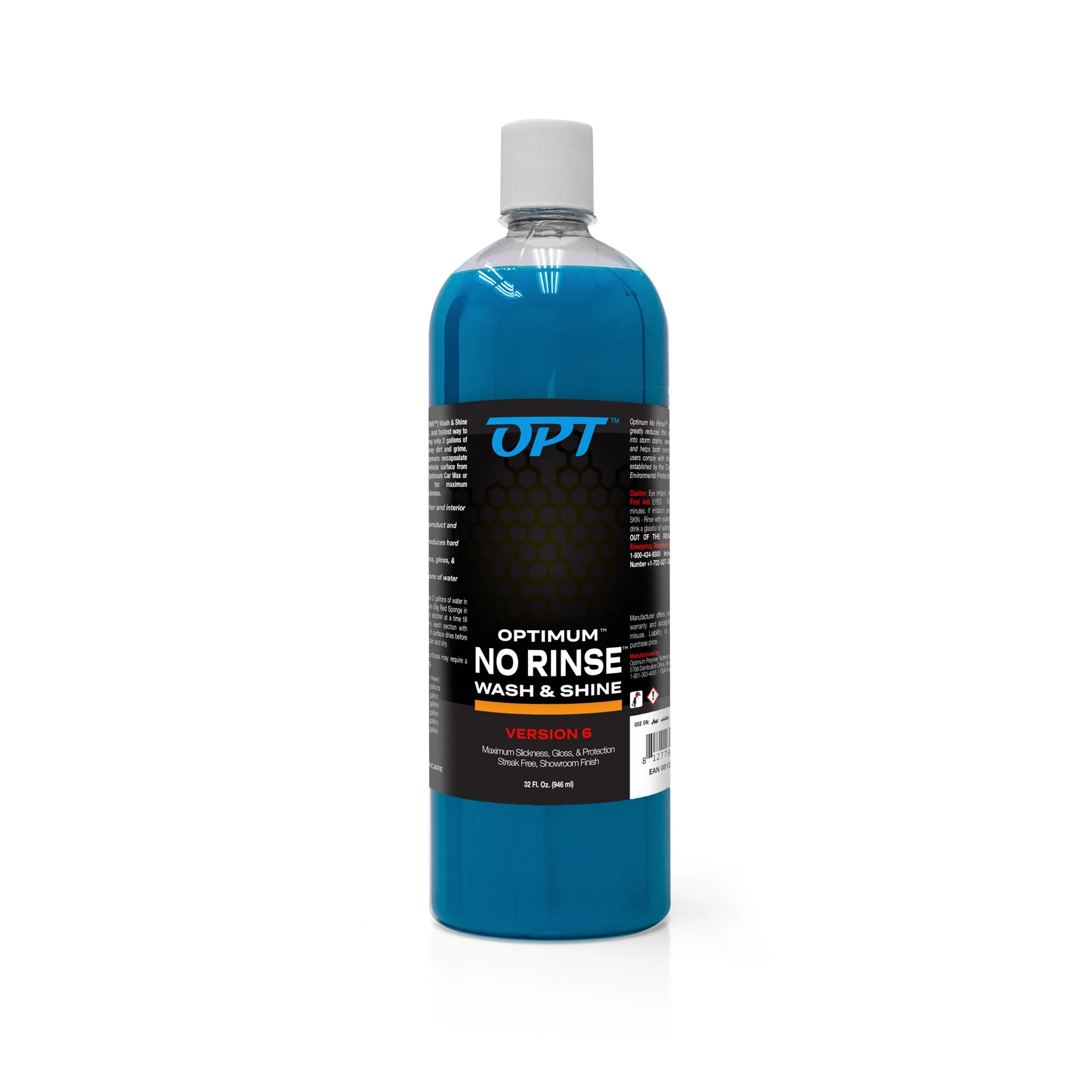
Use the No Rinse formula guide to settle the product choice, then check the Optimum collection for current sizes and availability. A useful order note identifies the full product, quantity needed, usable stock remaining and intended pickup or eligible local-delivery arrangement.
When you contact Cen-Tex, bring those figures rather than asking for a guaranteed number of washes per bottle. Your complete kit is ready when the process, clean supplies, measured consumption and replenishment plan agree. A larger purchase alone cannot supply that agreement.
Plan Your Order
Choose in-store pickup or eligible local delivery. Confirm the version, size and bottle-label instructions.