Detailing
Which Optimum No Rinse Should You Buy? A Guide to the Three Formulas
The Cen-Tex Counter · Nov 18, 2026 · 9 min read
Choose Wash & Shine, Wash & Wax or Hyper Foam around your wash method, finish requirements and equipment, with practical buying scenarios.
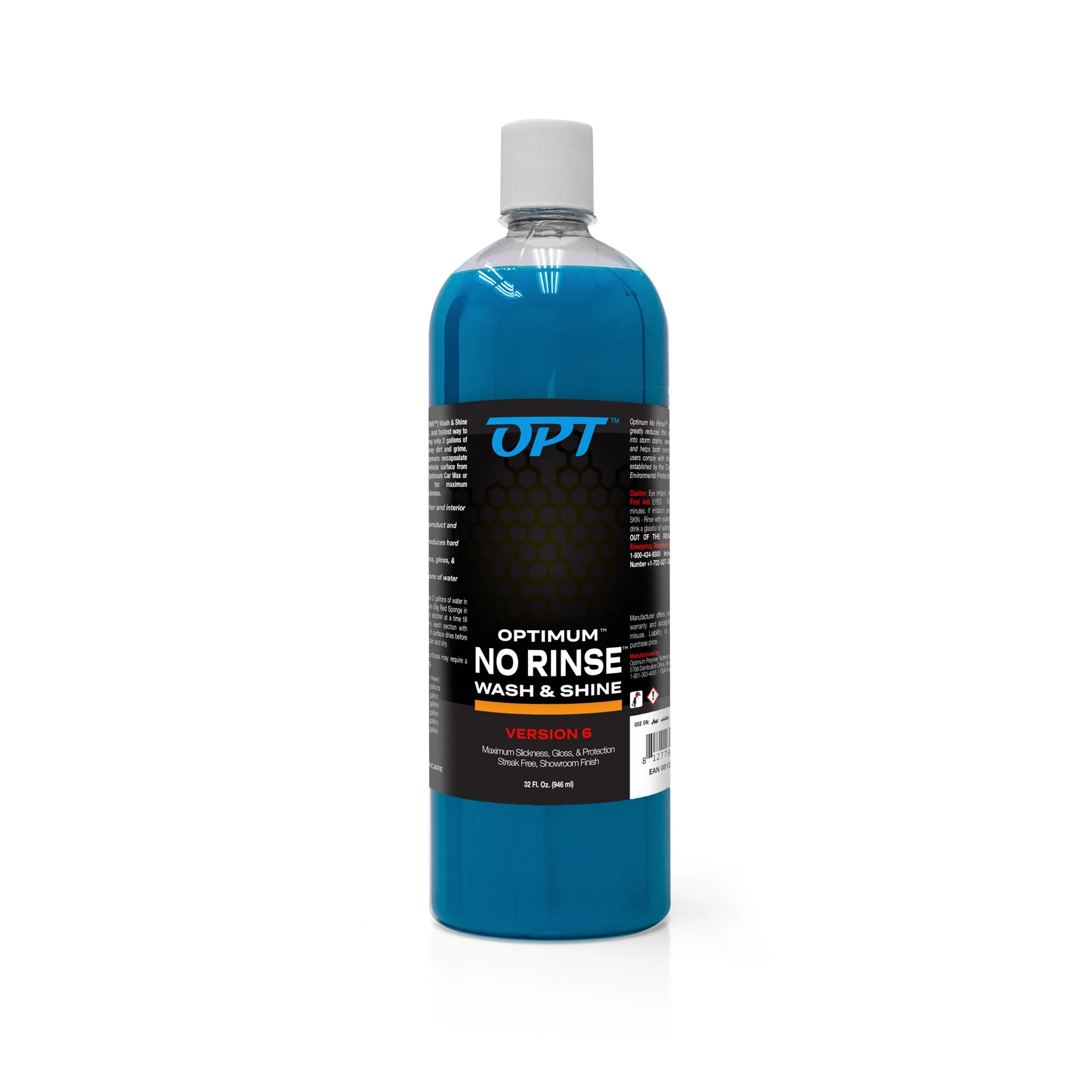
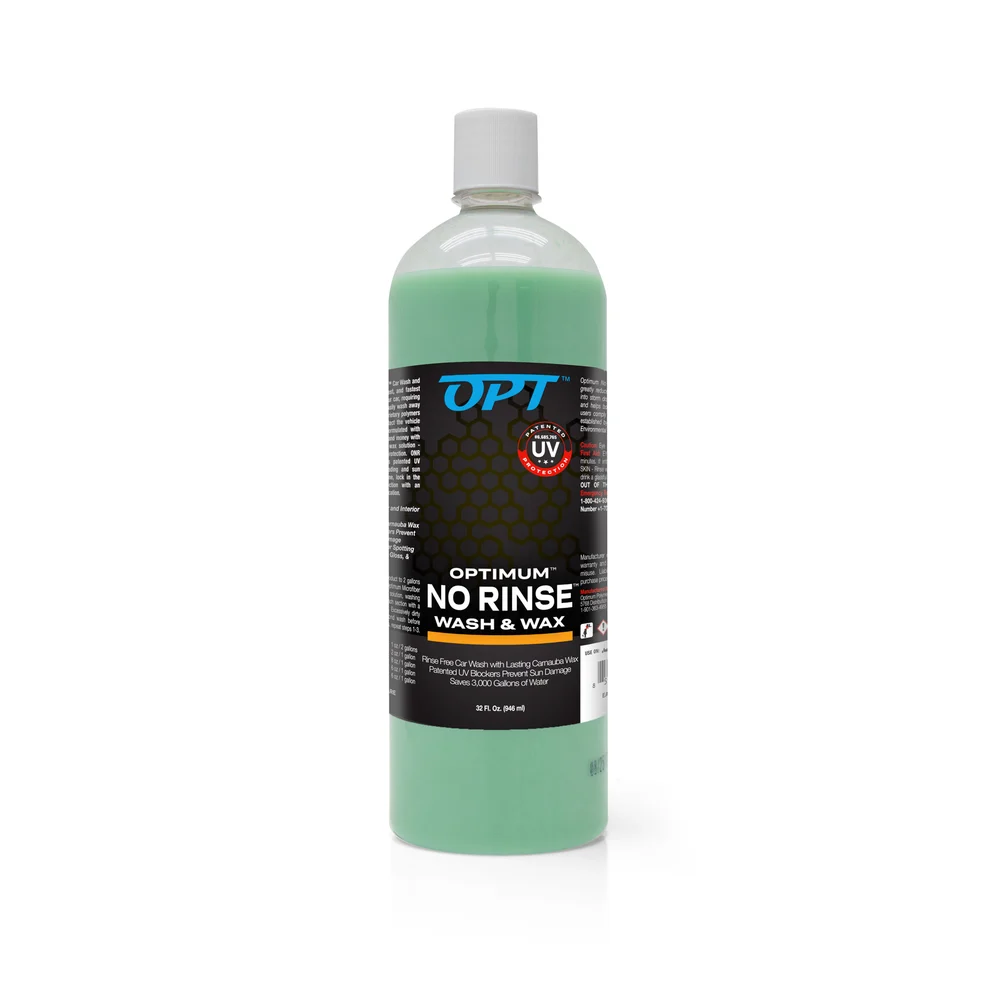
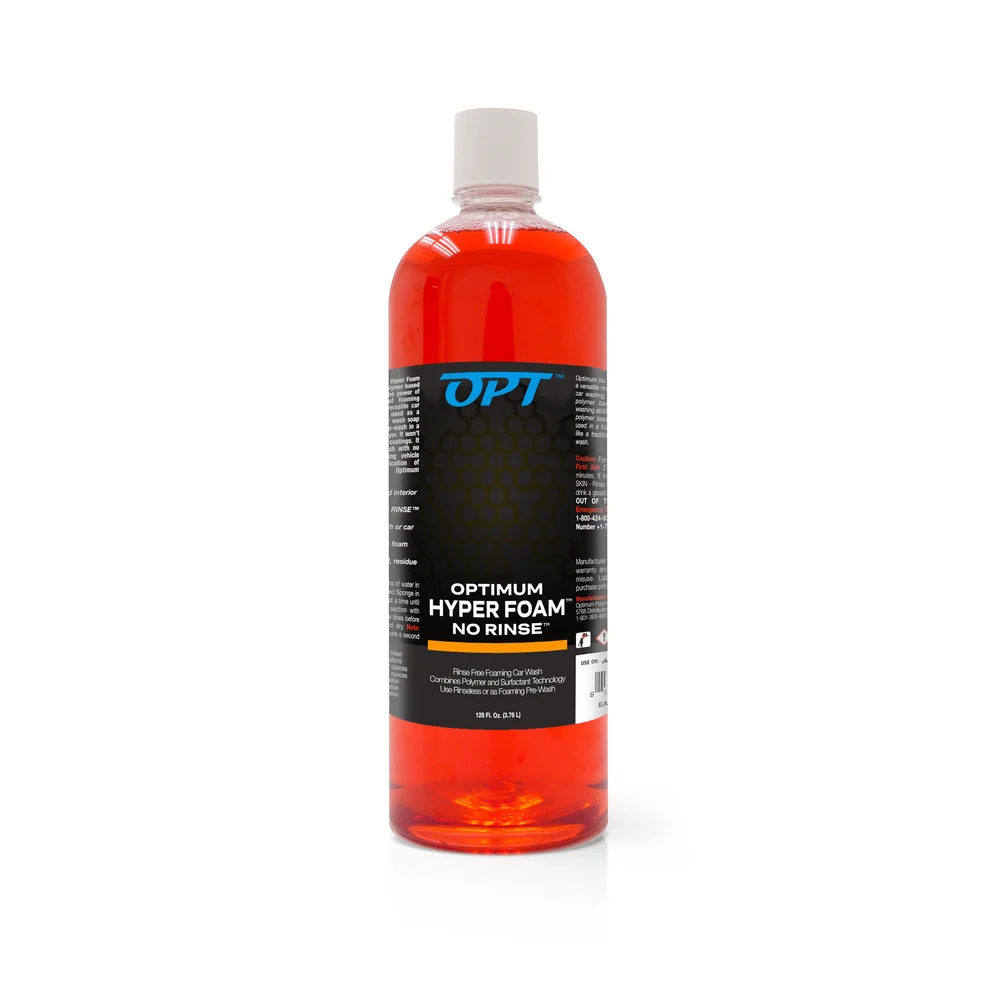
Choosing a rinseless wash should make your routine simpler. Yet three products with No Rinse on the label can make a straightforward purchase feel more complicated than it needs to be. Is the green bottle an upgrade over the blue one? Does the orange formula replace a foam soap? Should a beginner buy whichever container offers the lowest price per ounce?
The better starting point is the job. Decide how you plan to wash, whether added protection belongs in that process, and what equipment you intend to use. Then compare formulas. This guide covers the three No Rinse products listed by Cen-Tex: Wash & Shine, Wash & Wax and Hyper Foam. The recommendation depends on the process you want to perform, not a claim that one formula wins every comparison.
The three choices at a glance
Optimum No Rinse Wash & Shine is the blue formula. Optimum describes its current Version 6 as a rinseless wash with polymer protection. “No soap residue” does not mean that absolutely nothing remains on the surface. See the current manufacturer information.
Optimum No Rinse Wash & Wax adds carnauba-enhanced protection. The manufacturer's current page directs you to the bottle for dilution. Do not transfer instructions from another formula merely because both names include No Rinse.
Hyper Foam No Rinse offers a foaming option. Optimum lists rinseless, conventional and foam-prewash methods, without added wax or sealant protection. Its product directions distinguish the methods and their mixtures.
Those differences create useful choices. They do not create a simple good, better, best ladder. A feature is valuable when it serves your process; it can be irrelevant when it does not.
A quick decision before the detailed comparison
- Bucket-based maintenance, without deliberately adding a wax step: start by considering Wash & Shine.
- Maintenance washing with added carnauba protection as an explicit goal: consider Wash & Wax.
- A routine that includes foam equipment or several wash methods: compare Hyper Foam.
These are starting points, not blanket compatibility approvals. Before choosing, check the care requirements for your finish and the exact method you plan to use. If those requirements rule out a feature, that matters more than the bottle color or a larger package discount.
Question one: what does your normal wash actually look like?
Describe your usual wash in a sentence before shopping. “I maintain one vehicle with a bucket and clean towels” is a different assignment from “I want one product I can use in a bucket and through foam equipment.” A product comparison becomes much easier once those are separate conversations.
For a bucket-focused routine, begin with the rinseless method you intend to follow. You do not need to buy foam equipment simply because a formula offers that possibility. If foam equipment is already part of your work, Hyper Foam deserves a closer look, but the equipment instructions still matter. Having the right concentrate does not automatically establish the correct setup or operating procedure.
Also separate an ordinary maintenance wash from a difficult cleaning job. A product purchase cannot eliminate the need to assess the vehicle. If the work regularly involves heavy buildup that needs removal before contact washing, account for that step in your plan. Do not choose a bottle around the hope that its name will let you skip necessary preparation.
Question two: do you want an added wax step?
Wash & Wax is worth considering when adding wax protection is part of your maintenance goal. That is a clear reason to choose it. “More features must be better” is not. If you are deliberately building a process without an added wax step, pause before selecting it just because the label sounds comprehensive.
Work backward from the complete job. Are you maintaining a vehicle between larger services? Are you preparing to apply another product that specifies a particular surface condition? Are you following an established maintenance plan for a coated vehicle? Those questions belong ahead of the purchase, not after the bucket is mixed.
For any later coating or protection step, use that product's preparation instructions. A wash guide cannot substitute for them. Likewise, avoid assuming that a word such as protection identifies identical chemistry, durability or preparation requirements across all three formulas. Choose the intended role rather than turning a shared marketing term into a technical equivalence.
Question three: will you actually use the foam capability?
Hyper Foam may make sense when your workflow includes foam equipment as well as bucket washing. The practical question is whether you will use that flexibility often enough to make it relevant. If the equipment stays on a shelf and your actual routine is always bucket-based, compare the product for the method you really perform.
When foam is part of the plan, record the exact method rather than writing “use ONR” on a shop instruction sheet. A foam-cannon mixture and a rinseless bucket mixture are different tasks. The right reference is the specific product's current directions for the intended use, alongside the equipment's instructions.
Think about who will perform the work, too. A versatile product can simplify purchasing, but it can also require clearer training when several methods share the same bottle. Convenience should be measured across the whole routine: identification, measuring, equipment setup, application and cleanup. Fewer bottles do not automatically mean fewer opportunities for confusion.
Three realistic buying scenarios
Consider an owner who washes one car regularly and wants a repeatable bucket routine. That buyer should prioritize understanding the method and having the supplies to complete it. Compare Wash & Shine with the requirements of the vehicle's finish, and consider Wash & Wax if an added wax-maintenance step is specifically wanted. Buying the largest container or the most versatile formula is secondary to getting those decisions right.
Now consider a detailer who already uses foam equipment on some jobs and a rinseless bucket process on others. Hyper Foam becomes relevant because its available methods match an existing need. Before switching, the detailer should update the written mixing references and identify which equipment and procedures belong to each job. The value is in a deliberate process, not an assumed claim that every job will be faster.
Finally, consider a shop buying supplies for several employees. The best purchasing decision may be the one staff can execute consistently. If two formulas are needed, label storage locations and instructions clearly. If one formula meets the chosen work, avoid adding another simply to give the shelf more variety. These scenarios are decision examples, not reports of Cen-Tex customer results.
Choose the formula before choosing the bottle size
A low price per ounce is useful only after you have selected the right product. Otherwise, a large container can turn an uncertain decision into a larger commitment. Check the selected size and current price on the live product page rather than comparing a range's starting price with a different product's largest size.
For a new routine, estimate consumption conservatively and then measure it. Keep notes on concentrate used, batches mixed and work completed. Those records give you a better basis for the next order than a generic claim about how many washes every bottle should provide. Vehicle condition, workflow and leftover solution can affect the practical purchasing calculation.
For an established shop, review whether the ordering unit matches actual turnover and storage arrangements. Follow the product's storage instructions; do not invent a shelf-life assumption to justify a bulk purchase. Our rinseless kit and consumption guide explains how to build a purchasing calculation from your own usage rather than an advertised ideal.
Avoid these comparison mistakes
- Treating liquid color as the complete product identifier. Read the name and applicable version on the label.
- Assuming more concentrated means more effective. Use the correct directions rather than adjusting by instinct.
- Copying a dilution chart from one formula to another without checking its scope.
- Treating rinseless and waterless as interchangeable words. Identify the actual method before selecting instructions.
- Comparing prices without checking container sizes and selected variants.
- Assuming an added protection feature replaces every other preparation or maintenance requirement.
A useful comparison should leave you with fewer assumptions. If a recommendation relies on a claim about speed, durability or surface compatibility that is not supported for your exact situation, ask what evidence supports it before reorganizing your process around it.
Switching formulas? Update the whole routine
Suppose you used Wash & Shine in a bucket and now want Hyper Foam for a second method. The purchase is only one part of that change. Keep the bucket procedure separate from the foam procedure, identify the equipment for each, and replace any instruction that says only “mix ONR.” Otherwise, a correct bottle can still be paired with an old, inappropriate recipe.
For a personal kit, a short note is enough: complete product name, intended method and where to find the applicable directions. For a shop, keep that information wherever the mixture is prepared. A staff member should not need to infer the formula from the color of a secondary container. Follow applicable labeling requirements rather than relying on an informal nickname.
Review the change after the first jobs. Did the new product actually address the reason you bought it? Was the extra method used, or did the routine remain unchanged? This is a process review, not a controlled performance test. It helps you avoid retaining complexity that does not serve your work.
Your final check before ordering
Check the exact formula, selected size and current availability. Confirm that the intended wash method matches the product directions you have reviewed. If the vehicle has a finish with its own care requirements, reconcile those requirements before use. For mixing help, use the No Rinse dilution guide, which clearly identifies the formulas and methods covered.
Browse the Optimum collection for current options. Cen-Tex offers in-store pickup and eligible local delivery; review the delivery policy rather than assuming parcel shipping or a particular delivery date. If you contact Cen-Tex, describe the method you use and what you want to change. That gives the conversation a practical starting point and helps you buy for the work, not merely for the label.
Plan Your Order
Choose in-store pickup or eligible local delivery. Confirm the version, size and bottle-label instructions.