Detailing
Optimum No Rinse Dilution Math: Water Volume vs Finished Solution
The Cen-Tex Counter · Nov 18, 2026 · 9 min read
Calculate a clearly defined batch, distinguish water from finished solution and build a mixing record that another person can check.
A useful dilution calculation answers three questions: which product, which method and which volume? Skip any of those and a precise calculator can still give the wrong practical answer. The aim is not to memorize every ratio associated with the initials ONR. It is to turn the instructions for your actual bottle into a batch that can be measured, checked and repeated.
This guide separates the published directions from the arithmetic built around them. The examples are calculations, not tests of cleaning performance, recommendations to increase concentration or promises about how many vehicles a batch will wash. Keep the product label beside the calculation, particularly when changing formulas or equipment.
Define the instruction before entering numbers
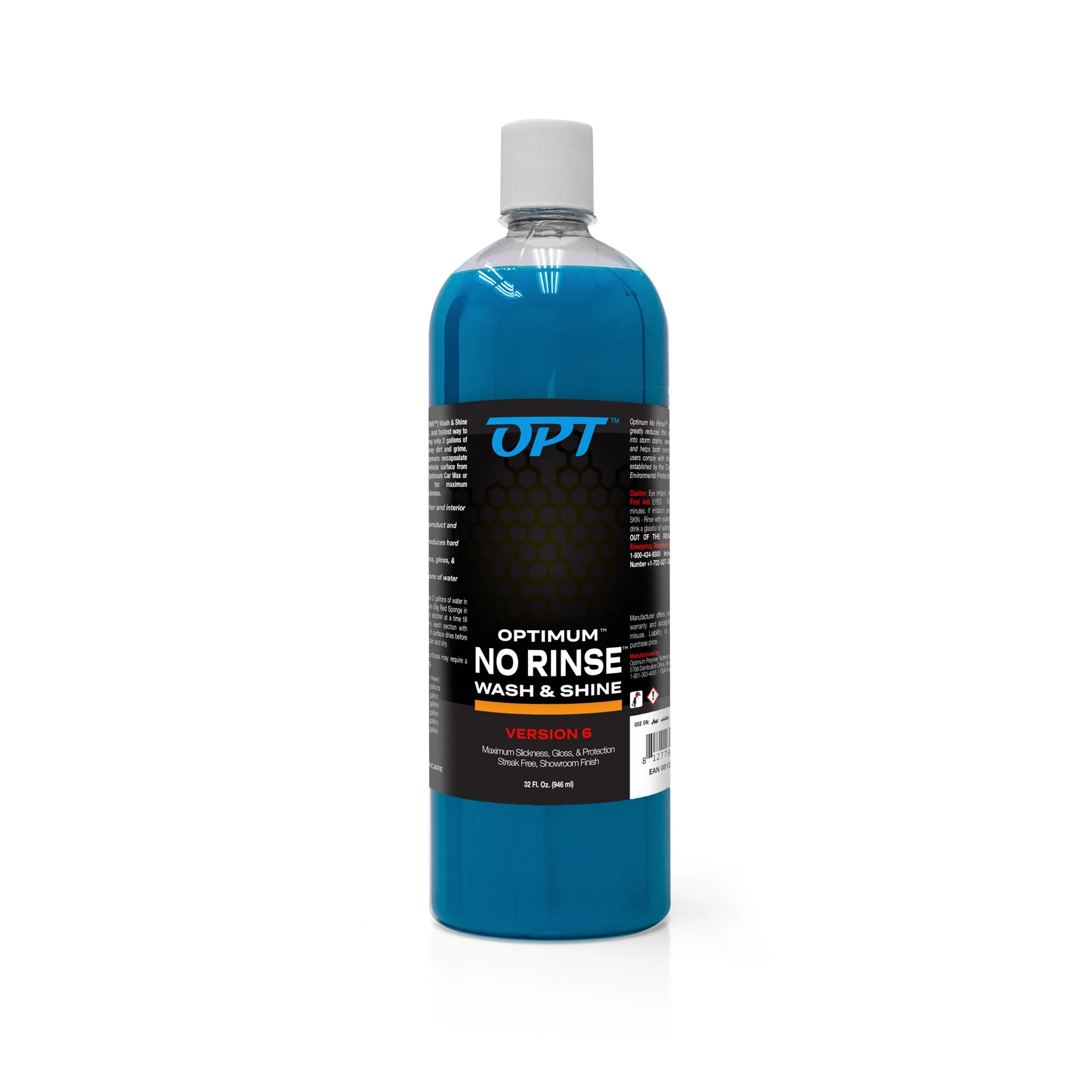
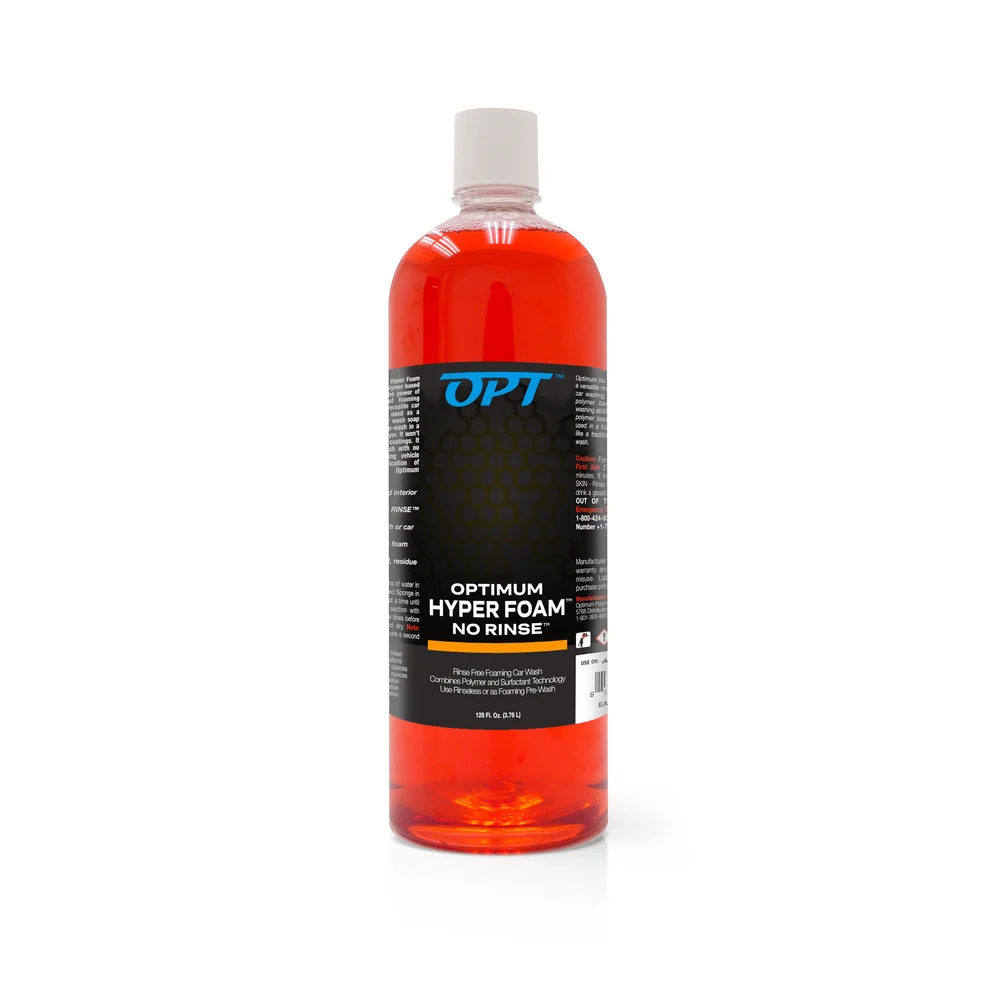
The current Wash & Shine Version 6 directions and Hyper Foam directions give a bucket-wash dose of 1 US fluid ounce per 2 US gallons of water. Hyper Foam separately specifies 2–4 US fluid ounces in 32 US fluid ounces of finished solution for a foam cannon. Check your actual label before using either example.
Notice the different denominators: water in the bucket instruction, finished solution in the foam instruction. Also notice that these are different application methods. A foam-cannon mixture does not become an appropriate bucket recipe merely because the same product name appears on both instructions.
Write the instruction in words before abbreviating it. “Concentrate added to measured water” and “concentrate included within a final volume” are much harder to confuse than an unlabeled ratio on a container.
Scale a water-based recipe directly
For the bucket example, divide the intended water volume in US gallons by 2. The result is the concentrate required in US fluid ounces. This relationship only applies to the stated example; it does not establish a new use for the product.
- 1 gallon of water ÷ 2 = 0.5 fluid ounce of concentrate.
- 2 gallons of water ÷ 2 = 1 fluid ounce of concentrate.
- 3 gallons of water ÷ 2 = 1.5 fluid ounces of concentrate.
- 4 gallons of water ÷ 2 = 2 fluid ounces of concentrate.
Suppose you have measured 3 gallons of water and want to check the 1.5-ounce result. Reverse the calculation: 1.5 multiplied by 2 returns 3. That simple reverse check can catch a misplaced decimal before anything is poured.
Batch size remains a workflow decision. Having a correct recipe for a larger batch is not a reason to prepare more solution than the job requires.
Understand what “one part” actually means
There are 128 US fluid ounces in a US gallon, so 2 gallons of water contain 256 fluid ounces. Adding 1 fluid ounce of product gives 1 part concentrate to 256 parts water, or 257 parts in the finished mixture, using ordinary additive-volume mixing arithmetic.
This is why an unexplained “1:256” can cause confusion. It might describe product to water, while someone else could interpret it as product within the final mixture. Preserve the manufacturer's wording instead of relying on shorthand alone.
Do not use this distinction to invent unnecessary precision. The practical lesson is identifying what the denominator represents. A clear written recipe and a readable measuring tool are more useful than arguing about decimal places while estimating the bucket level by eye.
A finished-volume recipe needs subtraction
For Hyper Foam's stated foam-cannon example, the concentrate occupies part of the total. At the lower endpoint, 2 fluid ounces of product plus 30 fluid ounces of water make 32 fluid ounces of mixture. At the upper endpoint, 4 plus 28 make the same final volume.
Filling with 32 ounces of water and then adding product does something different: adding 2 produces 34, while adding 4 produces 36. Those are not 32-ounce batches. The error is not fixed by writing the desired volume on the bottle afterward.
The endpoints explain the published range, not which endpoint to select. Use the product and equipment directions for that decision. A larger concentrate amount should not automatically be treated as a better choice.
Scale a finished mixture without losing its definition
For an arithmetic exercise, imagine that a suitable container needs a 16-fluid-ounce finished batch at the lower endpoint of that foam example. The scale factor is 16 ÷ 32 = 0.5. Multiply both original amounts by that factor: 2 × 0.5 = 1 ounce of concentrate and 30 × 0.5 = 15 ounces of water.
The sum provides the check: 1 + 15 = 16. This is a proportion calculation, not confirmation that a particular cannon will operate correctly with that fill volume. Its minimum fill, connection and operating requirements still come from its instructions.
For an unfamiliar batch size, use the same pattern: desired final volume divided by reference final volume, then multiply each ingredient amount by that factor. Keep all volumes in the same unit throughout the calculation.
Do not confuse reservoir concentration with delivered mixture
The liquid prepared inside a foam-cannon bottle is not necessarily the same concentration as the liquid leaving equipment that introduces additional water. Bottle arithmetic alone cannot establish the concentration delivered to the vehicle.
For a deliberately simplified mathematical illustration, suppose 1 volume of a mixture containing 10% concentrate combines with 9 volumes of water. The combined 10 volumes contain 0.1 volume of concentrate, which is 1% of the total. These invented inputs are not specifications or dosing instructions for any cannon or product.
The point is to keep two questions separate: “Did I prepare the reservoir correctly?” and “How does this equipment deliver it?” Resolve the second from the actual equipment instructions rather than reverse-engineering it from foam appearance.
Choose units your measuring tools can support
Use US gallons and US fluid ounces consistently for the examples here. A fluid ounce measures volume; an ounce on a scale measures mass. Do not replace a volume instruction with the same numeric weight unless you have a justified conversion for that specific material.
If your equipment uses metric markings, convert the entire recipe consistently rather than mixing unit systems midway. Record the conversion used and keep enough precision for your measuring tool. A calculator displaying many decimals does not make an unmarked cup accurate.
Read the scale before selecting the batch. If the required amount falls between markings that you cannot reasonably distinguish, obtain an appropriate measure instead of rounding casually. Do not assume a cap or pump dispenses a known volume unless that quantity has been established for the actual device.
Keep Wash & Wax on its own instruction card
The current Wash & Wax manufacturer page directs users to the bottle label for dilution. Accordingly, this guide does not assign it the Wash & Shine or Hyper Foam dose.
That is a deliberate blank, not an invitation to guess. Copy the instruction from the exact bottle when it is available, identify its intended use and perform the calculation from that starting point. If the label is unreadable, obtain the correct instructions before mixing.
A shop that carries multiple formulas should use separate records with full product names. Color alone is a weak identifier, especially when a colleague is reading a handwritten note or looking at a diluted solution.
Use a batch card someone else can audit
A practical card needs more than a ratio. Include:
- Full product name and version, if identified.
- Intended application method.
- Source of the directions and when you checked them.
- Whether the stated quantity means water or finished mixture.
- Target batch size and unit system.
- Calculated concentrate and water amounts.
- Measuring tool used and the preparer's initials.
A reviewer should be able to reconstruct the numbers without asking what you meant. For the bucket example, “3 gallons water plus 1.5 fluid ounces concentrate” is clearer than “large bucket, usual strength.” Keep the original label accessible; the card supplements it rather than replacing safety information.
Investigate a mismatch instead of topping up by guesswork
If you know the product and exact amounts already measured, you can compare them with the intended recipe on paper before deciding what to do next. If the contents, contamination or measurements are uncertain, a calculation cannot recover the missing facts. Do not pour an unidentified mixture back into a concentrate container.
Record the reason for a failed batch: wrong unit, incorrect water level, duplicate addition or wrong formula. Those require different fixes. A larger label helps identification; a check box can prevent adding concentrate twice; an appropriate graduated container helps measurement.
Do not diagnose an unsatisfactory wash by automatically adding more chemical. Surface condition, application method, equipment and technique remain separate questions. Correct arithmetic only establishes that the chosen recipe was calculated correctly.
Check several batches without merging their purposes
A daily preparation plan can include more than one batch. Suppose the written plan calls for three separate bucket batches, each starting with 2 gallons of water at the example dose. The supply requirement is 6 gallons of water and 3 fluid ounces of concentrate in total. Each individual batch still needs its own measurement and identification. A correct daily total does not prove that the concentrate was distributed correctly between containers.
For example, adding all 3 ounces to the first bucket and none to the others leaves the inventory total unchanged while producing three incorrect batches. A preparation log should therefore record individual batches, not merely a daily chemical total. This is especially useful when more than one person prepares equipment or when several similar containers are waiting together.
A final check before the next order
Use our formula guide if the product choice is still unresolved. Then select the exact Wash & Shine, Wash & Wax or Hyper Foam listing rather than treating the family name as a complete specification.
Before preparing a batch, confirm the bottle, method, denominator, units and measuring tool. Follow label precautions and consult the applicable Optimum safety data sheet. A reusable mixing process succeeds when the next person can follow the same verified instruction, not when a handwritten ratio looks impressively technical.
Plan Your Order
Choose in-store pickup or eligible local delivery. Confirm the version, size and bottle-label instructions.