Detailing
How to Plan a Rinseless Car Wash From First Inspection to Final Check
The Cen-Tex Counter · Nov 18, 2026 · 9 min read
Build a complete rinseless workflow around the vehicle's condition, clean supplies and manageable sections, without treating every job alike.
A rinseless wash is most useful when the whole process makes sense, not just the chemical choice. You need a vehicle suited to the method, a workable location, the correct mixture, clean supplies and enough time to finish each stage properly. If one of those pieces is missing, a small bucket and a familiar bottle will not make the job effortless.
This guide walks through the decisions that make the routine repeatable. It focuses on organizing a maintenance wash rather than promising a universal water quantity, completion time or scratch-free result. The product label remains your application reference. The practical planning below helps you turn those directions into a job you can complete without searching for towels, guessing what is clean or rushing the final inspection.
Start with the vehicle, not the bucket
Walk around the vehicle before preparing supplies. Look at the type and distribution of contamination rather than judging the whole job from a clean-looking hood. A vehicle can have light dust on its upper surfaces and much heavier buildup lower down. Identify the difficult areas before deciding what the wash will involve.
Optimum's rinseless wash guide distinguishes routine soil from heavy abrasive buildup. Substantial mud, sand or caked contamination needs removal before contact washing. Rinseless means no final hose rinse; it does not mean no water, no drying or permission to ignore the condition of the surface.
If your location does not let you address that buildup appropriately, change the plan. It is better to use a suitable location or method than to force a convenient setup onto an unsuitable vehicle. Making that decision early avoids mixing a batch and opening all your supplies before discovering that the first step cannot be completed.
Decide what this wash includes
For your own car, define the boundaries of the job. Are you doing exterior maintenance only, or adding separate wheel and interior tasks? Those extra tasks need their own tools, products and instructions. Keeping the plan clear helps prevent a quick exterior wash from expanding into an unfinished afternoon of unrelated work.
For a paid service, make sure the agreed scope is equally clear. A maintenance wash should not quietly become a promise to remove every bonded contaminant, correct paint defects or solve a persistent odor. Those are different questions. Note anything that needs another service rather than repeatedly working at it with the assumption that more washing must be the answer.
A simple job note can record the chosen method, areas requiring attention and anything outside the current scope. This is not paperwork for its own sake. It gives the final inspection something concrete to check and helps another team member understand what has and has not been completed.
Arrange a workspace that supports the sequence
Think about access before starting. Can you move around the vehicle without shifting containers through your working area? Are clean textiles protected from accidental contact with used tools? Can you reach a drying towel without leaving a partly completed section? Small layout choices can remove unnecessary interruptions.
Create a clearly separated place for clean supplies and another for used items. The distinction should be obvious even when you are busy. A towel should not need a memory test to determine whether it is unused. Keep wheel and tire tools separate from the supplies intended for paint rather than relying on everyone to remember which tool touched which area.
Also plan where the supplies will go when the job ends. Used towels, leftover equipment and product containers need an orderly next step. A wash routine that finishes with a pile of unidentified textiles creates confusion at the start of the next wash, even if today's vehicle looks finished.
Confirm the exact product and mixture
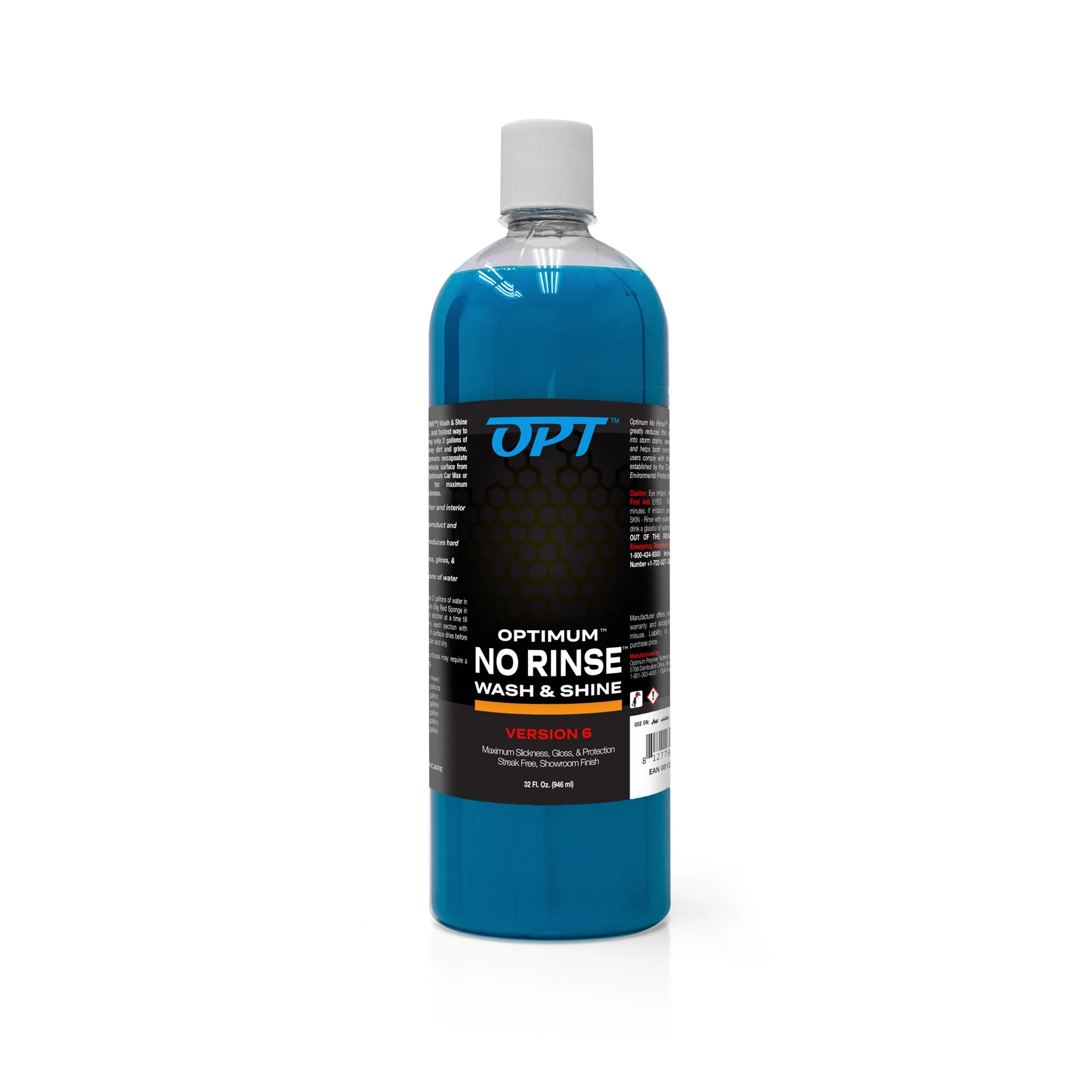
Read the full product name and applicable directions before measuring. Wash & Shine, Wash & Wax and Hyper Foam are distinct options. A handwritten note that says only “ONR” is not enough to establish which instructions belong to the bottle in your hand.
Measure instead of estimating. Identify whether the instructions describe a quantity of water or a finished solution volume. Our No Rinse dilution guide explains that distinction with explicitly scoped examples. Do not strengthen a mixture simply because the vehicle seems more difficult; first reconsider whether the condition calls for a different preparatory step or method.
Keep the relevant label instructions available throughout the job. If a label is damaged or unreadable, resolve that before using the product. A routine should become familiar through correct repetition, not through slowly replacing the original directions with something remembered approximately.
Have the drying stage ready before contact washing
The current Wash & Shine instructions call for saturated media and section-by-section microfiber drying; if solution dries first, rewash that area. The operational lesson is simple: prepare for the whole section before beginning it, rather than treating drying as a later task to organize once washing is underway.
Set out enough clean supplies for the work you expect, with replacements accessible. There is no useful universal towel count for every vehicle and condition. If you repeatedly run out midway through a job, record that pattern and adjust the kit instead of improvising with whatever textile is nearest.
Look at the working surface and conditions as the job progresses. Choose a section size you can actually complete according to the directions. A section is a practical unit of work, not a rule that must remain the same size regardless of interruptions, access or changing conditions.
Use a deliberate section-by-section sequence
A useful section record can be as simple as “not started,” “washing” and “washed and dried.” On a team job, agree who owns each area and communicate when it is complete. If one person washes while another dries, the handoff must keep pace with the product directions; adding a second person does not make unfinished wet sections ready to leave unattended.
Before each section, check three things: the area you intend to complete, the clean media you will use and the towel ready for drying. That brief check is especially useful after a distraction. It helps you resume the process deliberately rather than picking up a tool and guessing where you stopped.
Complete the chosen section according to the product instructions, then move on in an organized sequence. Avoid bouncing between unrelated areas without a reason. A consistent route makes it easier to see progress and easier to notice an area that has not been completed. It also reduces the mental load of trying to remember several half-finished sections.
If something unexpected appears, pause and assess it. An unfamiliar mark is not a reason to improvise an aggressive treatment within a maintenance wash. Record it, determine whether it belongs to a separate process and use appropriate guidance before taking that next step. Finishing the planned wash and recognizing its limits are compatible goals.
Know when to stop and reset
Interruptions happen. A customer arrives, a phone rings, a towel falls or supplies run short. Build a reset habit rather than assuming you can always continue from the exact point you left. Identify the active section, check what is clean and review whether the area needs to be addressed again under the product directions.
If a tool's condition is uncertain, do not let convenience make the decision. Keep enough replacement supplies available that setting a questionable item aside is practical. The purpose of the clean-versus-used arrangement is to make the better choice easy, especially when the job is busy.
Likewise, if the conditions no longer support the planned process, change the plan. The objective is a completed, controlled wash, not proving that a chosen method can be performed anywhere. Low water use also does not itself establish compliance with local water-use or wastewater requirements; the location still needs to be suitable.
Inspect against the original scope
At the end, walk around the vehicle again. Compare the result with the areas and limits you noted before starting. Look for missed sections and unfinished parts of the agreed work. If you find something, distinguish a missed cleaning step from a mark that requires a different service rather than repeatedly treating both as the same problem.
For a customer handoff, describe any remaining issue accurately. Do not imply that a stain, damage or bonded contamination has been corrected if it has not. A clear explanation of what was completed and what needs another assessment is more useful than a vague promise that everything is perfect.
For your own maintenance routine, make the same distinction privately. The final check can reveal a supply problem, a sequencing problem or simply an issue outside the method's scope. Knowing which one occurred makes the next wash easier to improve.
Close the job so the next wash starts cleanly
Separate used textiles for their appropriate cleaning process, store products according to their labels and return equipment to its designated place. Check which supplies need replenishing. Follow relevant product and local requirements for handling leftover material; rinseless does not mean unrestricted disposal.
Keep a short record of what you learned. Did you need additional clean towels? Was the workspace awkward? Did the vehicle require a different initial cleaning step? Those observations are more useful than an unsupported minutes-per-car target because they identify changes you can actually make.
Once the workflow is established, use the kit and consumption guide to plan supplies around your own records. If the formula itself is the unresolved question, start with the three-formula comparison. A good rinseless routine is not a collection of shortcuts. It is a clear set of decisions that fits the vehicle, the product and the person doing the work.
Plan Your Order
Choose in-store pickup or eligible local delivery. Confirm the version, size and bottle-label instructions.