Paint Correction
Compound, Polish, Finish: Building A Paint Correction System That Works
Cutting fast is easy. Cutting fast and finishing down without a hazy second step is what separates a paid correction from a redo.
Most correction problems on the bench aren't product problems — they're system problems. A heavy cut compound paired with the wrong pad and too little pad pressure will leave you chasing haze for an hour you didn't bill for.
Start with the hardest panel, not the easiest
Test spot on the panel with the worst defects and the least forgiving paint. If your combo clears that, the rest of the car is downhill. If you test on a soft hood and then hit a hard German clear, you'll re-tool halfway through the job.
A three-step ladder that covers most cars
- Heavy defects: a heavy cut compound on a firm foam or microfiber cutting pad.
- Refine: an all-in-one with real cut that finishes down clean on most clears.
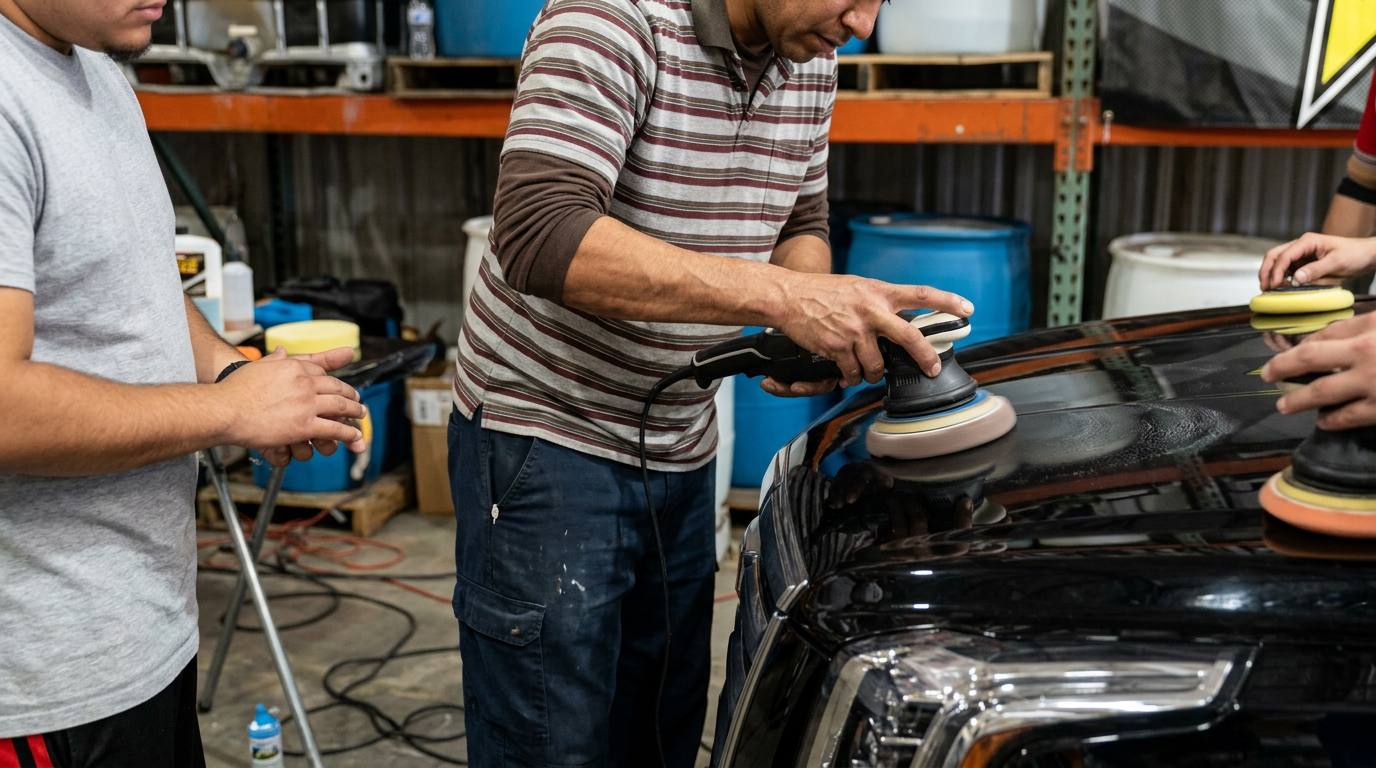
- Jewel: a fine polish on a soft finishing pad, low speed, light pressure, slow arm speed.
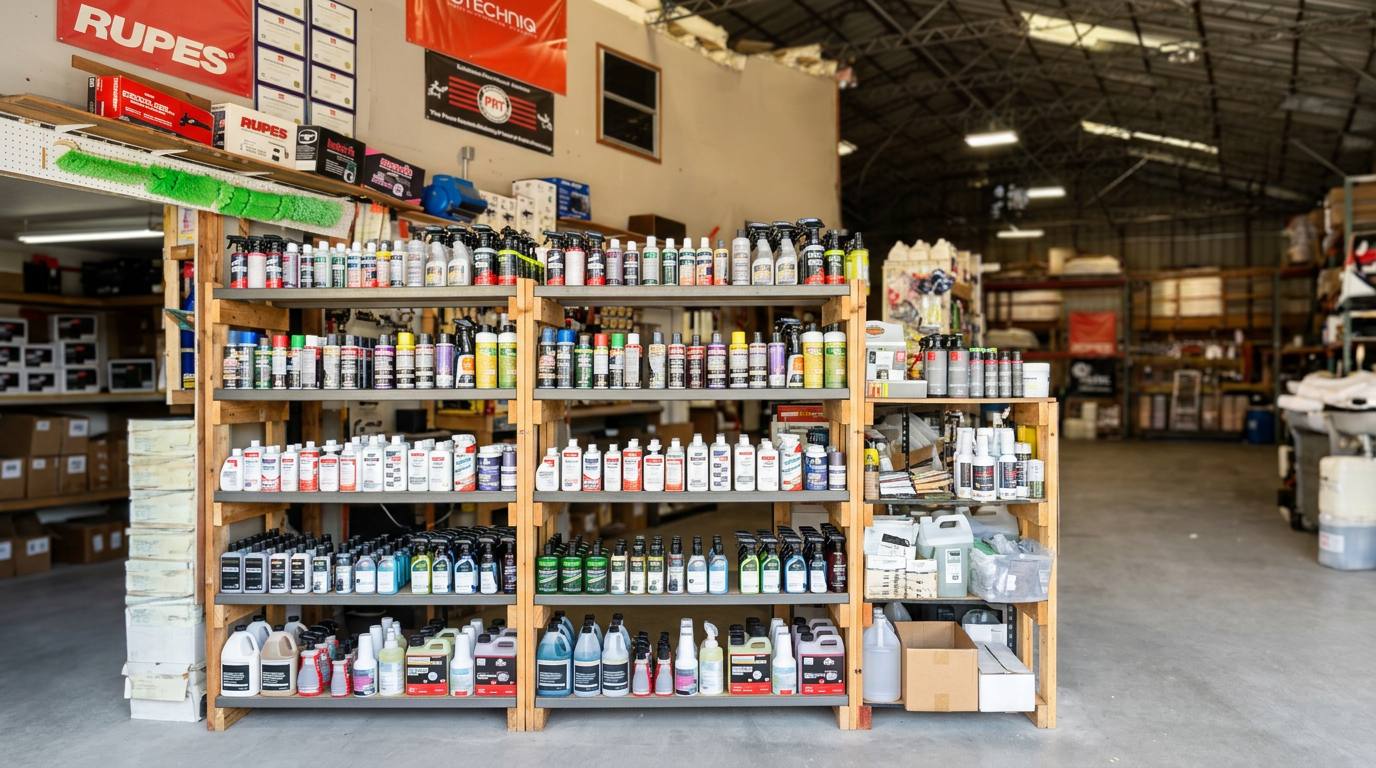
Pad choice changes cut more than compound choice does. Stock three pad densities before you stock five compounds.
Machine matters too
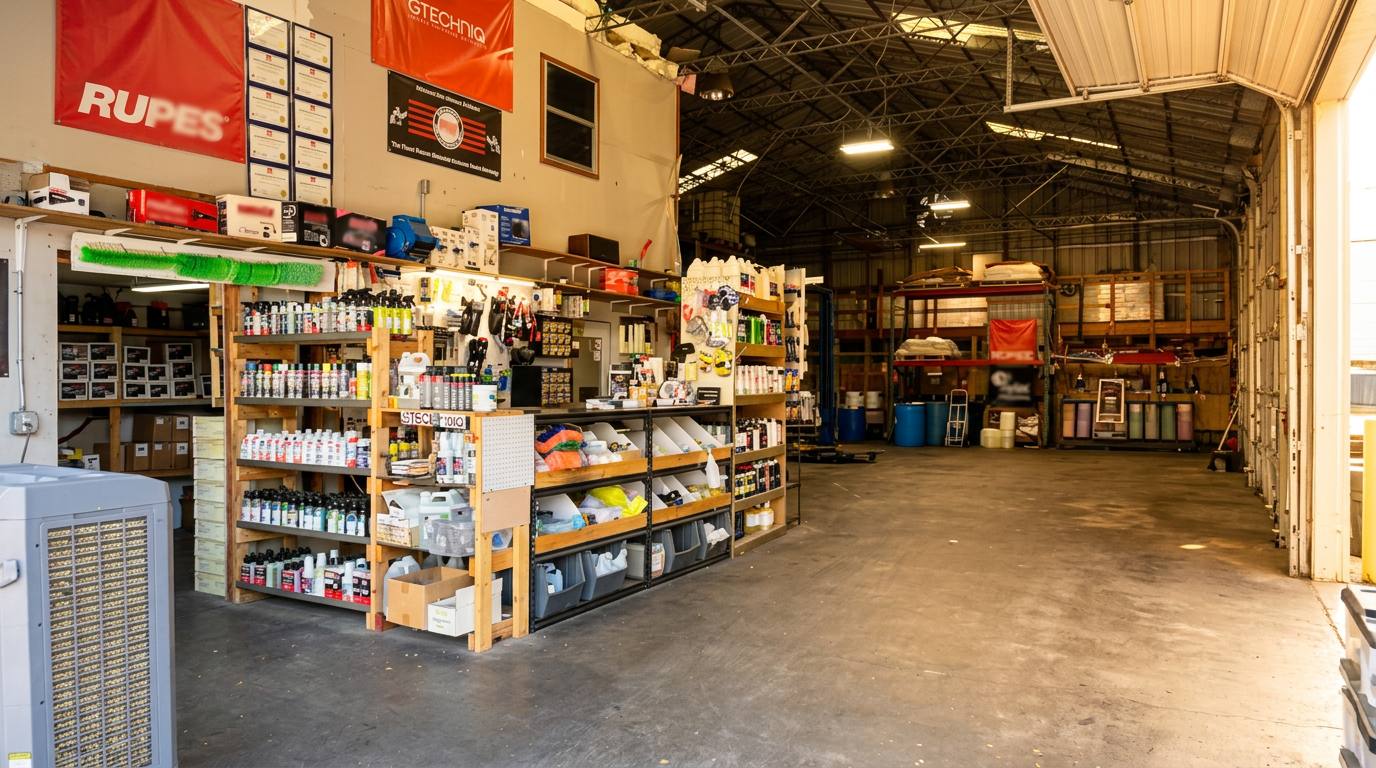
Throw and backing plate size change how a combo behaves. We stock polishers and the pads that fit them — bring your machine model to the counter and we'll match plates and pad sizes so nothing walks off center.
Keep your pads honest
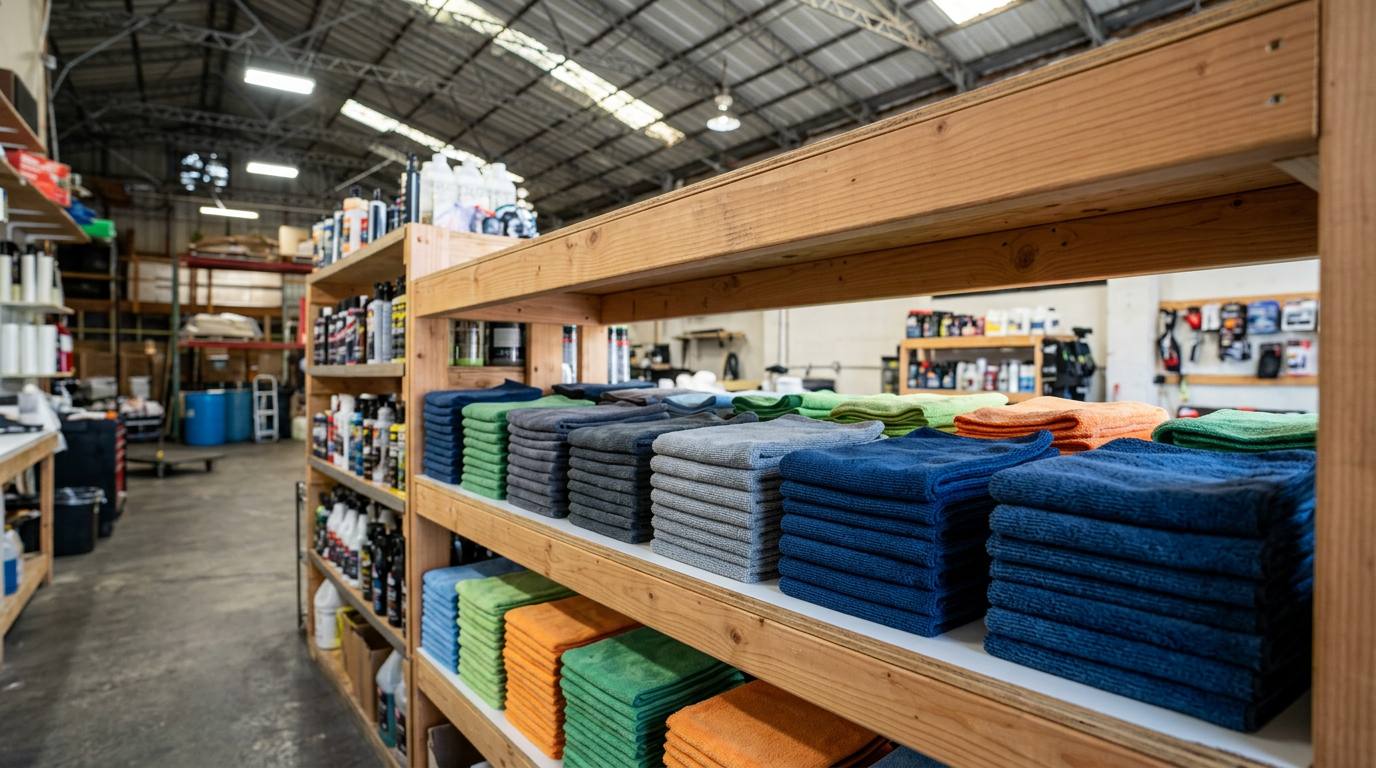
A loaded pad stops cutting and starts smearing. Brush it between panels, swap it every two to three panels on a heavy correction, and wash them the same day. Clean pads are the cheapest performance upgrade in the bay — and the same rules apply to your microfiber.
Correcting before a coating? Follow it with the coating prep checklist so polishing oils don't end up under your protection.
In Stock Now
Need the compounds and pads in this article? We stock them — same-day pickup in North Austin.