Detailing
Gtechniq Interior Care: Choose by Surface, Condition and Product Version
The Cen-Tex Counter · Nov 18, 2026 · 9 min read
Build an interior-care plan around the actual materials in the vehicle, with a practical guide to I2, C6, I1 and L1, version checks and purchasing decisions.
A vehicle interior is not one surface. A seat can combine different materials, a door can include several finishes, and an older repair can look similar to the factory material beside it. That makes “Which interior product is best?” an incomplete question. The better question is: “What am I treating, what condition is it in, and am I cleaning or protecting it?”
Gtechniq's I2, C6, I1 and L1 cover different jobs. This guide organizes those jobs into a usable purchasing plan without treating four bottles as a mandatory kit. It also explains an important naming issue: the current manufacturer's I1 and L1 pages identify newer generations, while Cen-Tex's listings retain AB names. Confirm the exact product supplied before using version-specific directions.
Separate the cleaning decision from the protection decision
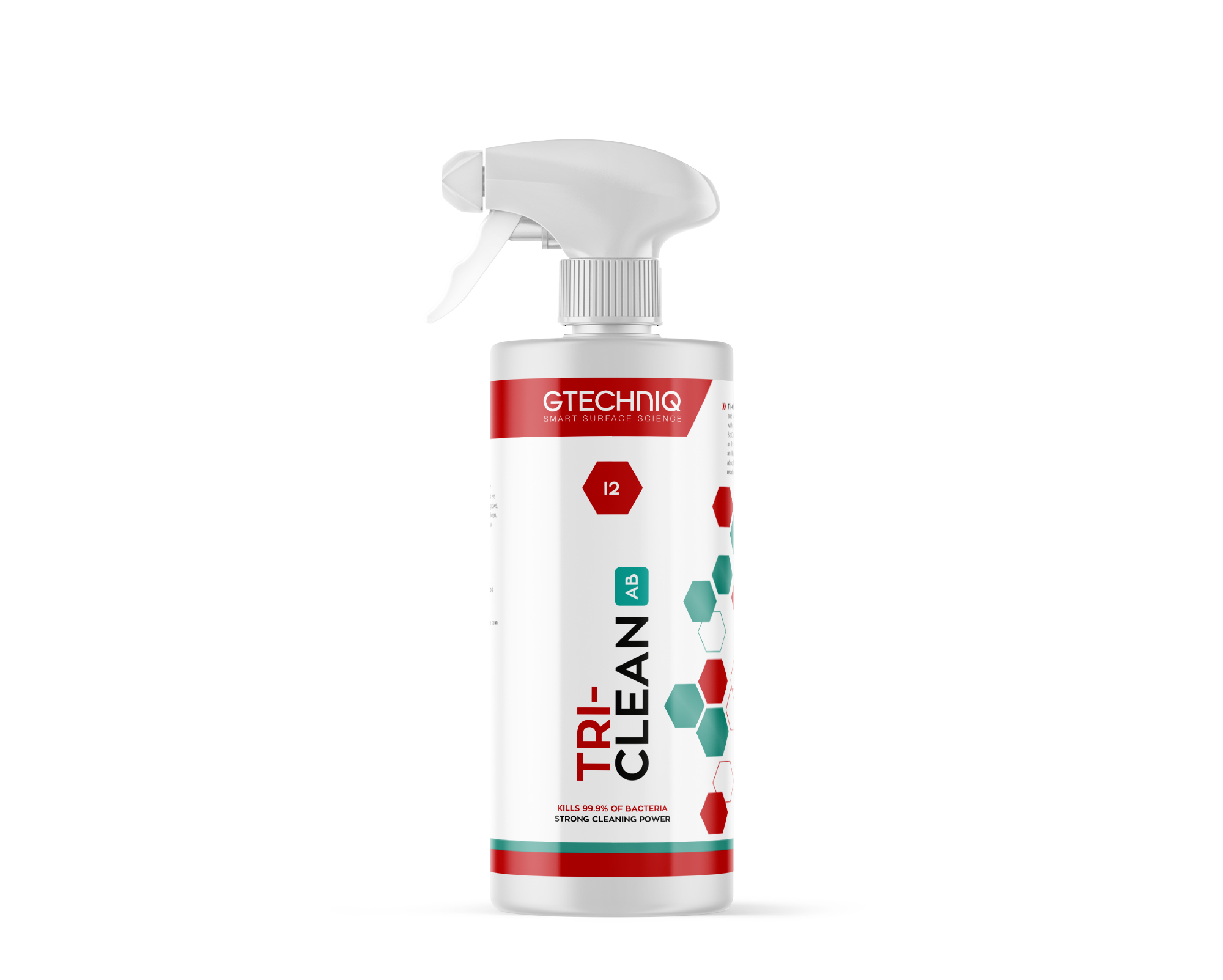
I2 Tri-Clean is the cleaner in this group. The current manufacturer directions call for application to a damp microfiber cloth, gentle cleaning and a clean-cloth wipe. They do not justify an improvised dilution or the assumption that more product solves every stain.
The other three products are protection choices for different materials:
- C6 Matt Dash AB is intended for suitable dashboard and door-card materials. Gtechniq excludes suede, nubuck and fibrous finishes and requires a clean, dry surface. See the C6 instructions.
- I1 Smart Fabric AB is the fabric-protection listing. The current manufacturer page describes I1 V3, so confirm the bottle generation rather than transferring its application schedule to unidentified stock.
- L1 Leather Guard AB is a leather-protection listing, not a stain remover. The current manufacturer page describes L1v2. Verify the supplied version and its restrictions before treating the material.
These distinctions help you avoid two common purchasing errors: expecting a protectant to do unfinished cleaning, and selecting a product by the location of the surface rather than its material. A door panel is a location; it is not a complete material specification.
Make a material map you can actually use
Start with the areas you intend to work on, not the whole vehicle by default. For each area, record the material if known, any existing damage or repair, the product history and the outcome you want. Mark uncertainty plainly. “Appears leather-like; specification not yet checked” is more responsible than calling every smooth seat surface leather.
Use the vehicle's material and care information where available. For an aftermarket repair, replacement cover or film, obtain the relevant supplier's guidance. Appearance and touch alone are not enough to establish compatibility, and a product's familiar brand name cannot fill in that missing information.
A practical map might contain these entries:
- Driver's seat bolster: material confirmed from vehicle information; previous treatment unknown; clean first, then assess protection.
- Rear fabric seat: material identified; recent cleaning still in progress; protection not yet scheduled.
- Door insert: repair history unclear; do not choose a chemical until the material is clarified.
- Dashboard: finish identified; desired result is a clean, even appearance, not additional gloss.
That is a planning example, not approval to use a particular chemical on those parts. It gives you a short list of questions to resolve before ordering. Keep screens, controls and other specialized surfaces on their own list rather than extending a general trim recommendation to them.
Define success before you start
“Make it look new” is difficult to inspect and can hide an unrealistic expectation. Replace it with an observable objective: remove routine soil from a confirmed material, prepare a compatible surface for protection, or establish a repeatable care process. Record existing wear separately from dirt.
For a customer's vehicle, agree on that distinction before the work. Cleaning and protection do not automatically repair worn coatings, damaged fibers or an earlier repair. If the material changes appearance unexpectedly during a permitted test, stop and investigate instead of turning the entire area into an experiment.
For your own vehicle, use the same discipline. A discreet test, when allowed by the applicable instructions, is a chance to assess compatibility and appearance before expanding the treatment. It is not proof that every similar-looking surface will respond identically. Keep the product, method and location identifiable so you know what you actually tested.
Use a sequence with decision points
First, confirm the material and read the relevant product label, safety information and vehicle-care guidance. Resolve conflicts or uncertainty before application. Next, complete the appropriate cleaning process. Only then decide whether protection is suitable and whether the surface is ready for it under the actual instructions.
Do not collapse those stages into one appointment promise before checking the requirements. The availability of a protectant does not mean it should be applied immediately after every cleaning step. A surface that looks ready to a hurried observer may still need time or further assessment under the product's procedure.
Your decision points are simple:
- Material known and permitted use confirmed: proceed only within the applicable instructions.
- Cleaning incomplete or result uncertain: continue assessment, not automatic protection.
- Required drying or working conditions unavailable: reschedule that stage.
- Existing damage or an unfamiliar repair: ask for appropriate advice before adding products.
The point is not to make routine care complicated. It is to prevent the last stage from concealing a problem that should have been addressed earlier. A short checklist is easier to repeat than a collection of assumptions.
Check the version before following a tutorial
Names such as I1, I1 AB and I1 V3 may look close enough to treat as interchangeable in a hurried search. Do not do that. The bottle in your hand, its labeling and the manufacturer's instructions for that version are what matter. The same caution applies to a listing titled L1 Leather Guard AB when the current manufacturer page uses L1v2.
Before the job, record the exact front-label name and any version identifier. Read the supplied directions and check that the online source corresponds to it. If the website, bottle or retailer description differs, ask the manufacturer or counter to clarify which instructions apply. Do not resolve a conflict by selecting whichever drying time is shortest.
This is also a purchasing question. If you need a specific version, confirm it before ordering rather than infer it from a generic product photograph. Keep your order details with the job record. A later refill can then be checked against the product you used previously instead of silently changing the procedure.
Troubleshoot the result without making the problem larger
If a surface still looks uneven after cleaning, document where and when the difference appears. Review the material identification and the procedure used. Do not assume the next step is a stronger chemical, a heavier application or a different protectant. Changing several variables at once makes the result harder to interpret.
If a mark does not respond to an appropriate permitted cleaning step, separate stain removal from protection. A protectant is not a promise to erase the mark. Decide whether the remaining issue needs specialist assessment or should be accepted as a limitation of the planned service.
If a treated area feels or looks different from the agreed finish, do not cover it with a second unrelated product to make the appearance uniform. Keep the product name, surface details and observations available when seeking help. Do not improvise stripping methods on an unidentified or repaired material.
Likewise, a persistent smell should not automatically lead to buying more protectant. Clarify the source and the scope of the cleaning problem rather than turning a product's marketing language into a diagnosis. This guide makes no sanitizing or health-protection promise for an interior treatment.
Three realistic planning examples
Imagine a hypothetical owner with fabric seats who wants protection before a family trip. The seats have just been cleaned, but the exact I1 bottle generation and readiness requirements have not been checked. The useful next step is to verify those details and the schedule, not apply immediately to meet the departure time. The owner may complete cleaning now and plan protection later.
Now imagine a hypothetical shop receiving a vehicle with a light-colored smooth seat and an old repair on one bolster. The shop should not select L1 solely from the color or location. It needs the material and repair information, an agreed objective and confirmation of the relevant product instructions. Existing wear belongs in the condition report rather than in a promise that protection will reverse it.
A third hypothetical customer wants a glossy dashboard because a previous dressing looked shiny. The purchase conversation should identify the finish and the result the customer actually prefers. It should not assume every dashboard product adds shine or that applying more creates a better result. The correct decision can be a suitable cleaning process with no additional protector until the finish is understood.
These examples are planning scenarios, not testimonials or test results. They show why material identification, timing and expectations can change an order even when the same products are available.
Build stock around jobs, not bottle count
For a single vehicle, list the surfaces in scope and remove products that do not serve an identified task. Separate the cleaner, any compatible protectant and the accessories specified for each procedure. Check what you already own, whether it is the correct product and whether its instructions permit continued use.
For a shop, track actual consumption by service type before estimating an order. A sedan's selected surfaces and a larger vehicle's full interior are not automatically equivalent jobs. Avoid promising a fixed number of vehicles per bottle without a documented basis. Record product version as well as quantity so replenishment does not become an unnoticed process change.
Compare current size options on the Cen-Tex pages. Do not choose solely by headline bottle price, and do not add a product simply because it completes a four-item set. A smaller, clearly specified order can be more useful than an assortment with no agreed application plan.
Prepare a concise counter request
Send the surface material, vehicle details, known repairs or treatments, desired result and exact product name. Explain what you have already tried and what remains uncertain. A useful question is “Is this the same version as the instructions I have?” rather than “Will this work on everything inside?”
Review I2, C6, I1 and L1, then contact Cen-Tex about unresolved details. Check current availability and the pickup and delivery policy before planning collection. The goal is not maximum chemical coverage. It is a controlled, repeatable process that respects the actual material and leaves clear instructions for the next maintenance visit.
Plan Your Order
Confirm compatibility and bottle-label instructions. Choose in-store pickup or eligible local delivery.