Detailing
How to Use Wonder Wafers After an Interior Detail
The Cen-Tex Counter · Nov 18, 2026 · 9 min read
Build an orderly finishing routine: confirm the customer's preference, identify the bulk format, follow placement directions and hand off the vehicle clearly.
A finished interior should look cared for before anyone notices its fragrance. The seats, glass and touch points tell the customer what was cleaned. An optional air freshener adds a personal preference to that result; it does not prove that the cleaning was thorough. Separating those two jobs makes the final inspection clearer and the customer handoff more professional.
Wonder Wafers can fit into that finishing routine, provided the team knows which package it is using and follows its directions. This guide covers a practical process from check-in to collection. The workflow recommendations are editorial suggestions for organizing a detail shop, not claims that Cen-Tex has conducted comparative product testing or that every vehicle should receive fragrance.
Start with a simple question at check-in
Ask, “Would you like an added fragrance, or no fragrance?” before the vehicle reaches the finishing area. That wording gives both answers equal weight. A customer who chooses no fragrance should not have to explain a personal preference, disclose a health condition or decline the same offer several times.
Put the answer where the technician will actually see it: alongside the requested interior service, not buried in an unrelated customer note. If a scent is selected, record its exact name. “Air freshener requested” is less useful than “Cotton requested” because it leaves the next employee to guess.
For someone booking a vehicle on another person's behalf, ask who can approve the choice. If the intended driver has not agreed, leaving fragrance out is a straightforward default. The same principle helps with fleet and dealership work: obtain an account-level instruction instead of assuming that every driver likes the purchasing manager's preference.
Identify the package before planning the job
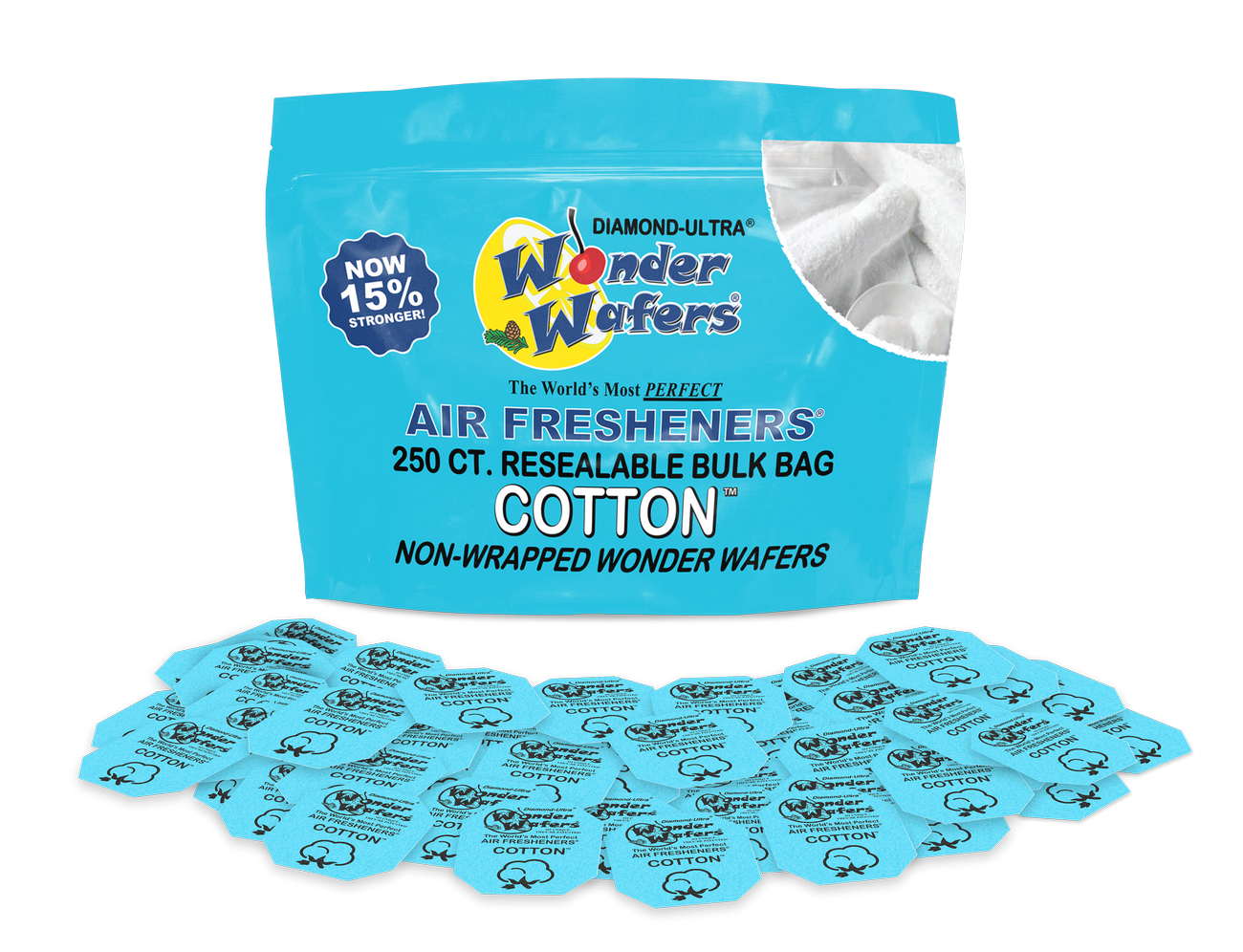
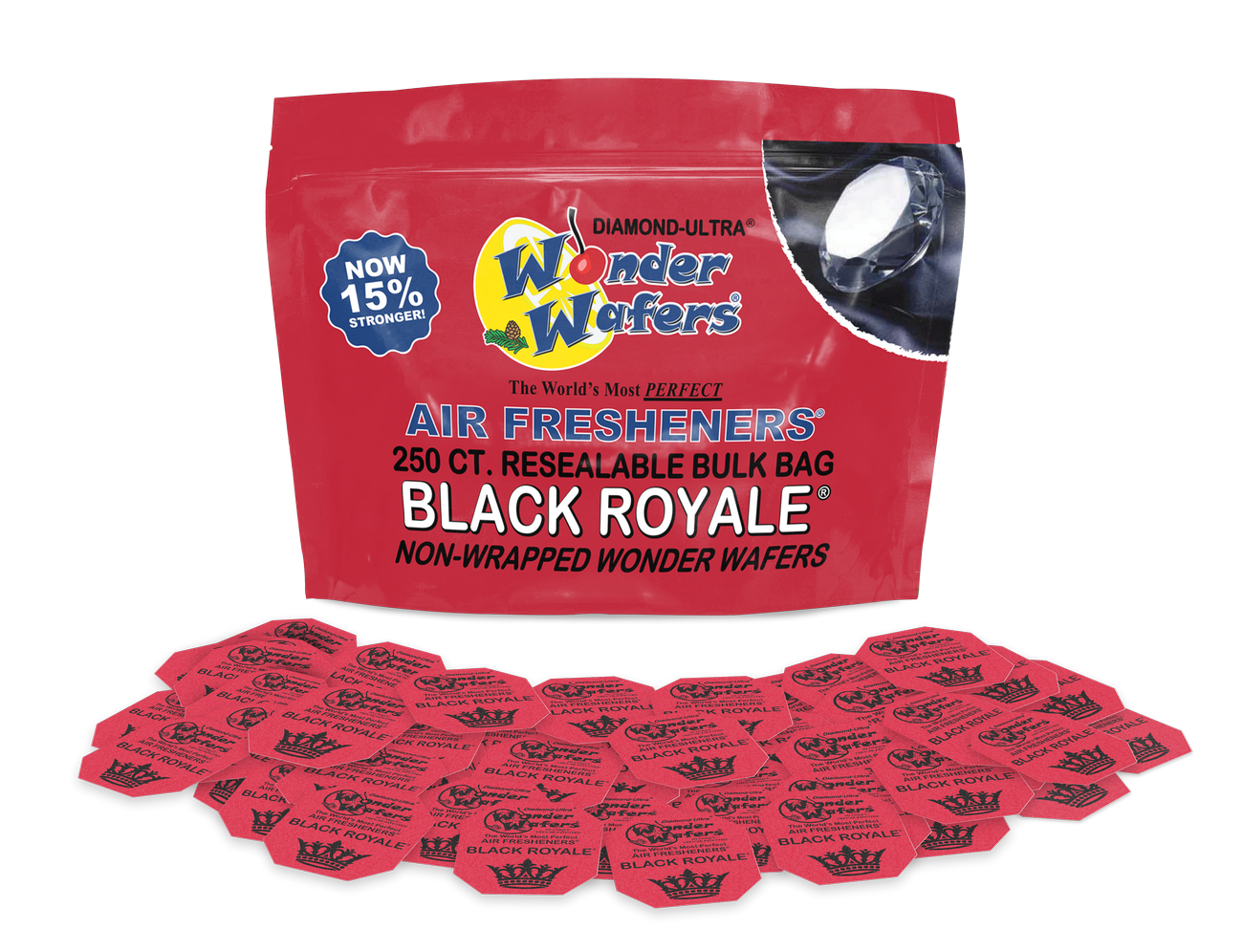
Cen-Tex's Wonder Wafers 250-count listing is a bulk-bag product. The manufacturer's matching format is non-wrapped and intended for attendant application. It should not be described as 250 individually packaged customer giveaways. Confirm the actual bag and selected scent when receiving an order.
This affects how supplies move through the shop. Keep the identifiable original package with the working stock rather than putting loose wafers into an unmarked drawer. Staff should be able to connect the item in their hand with its directions and the customer's selection. Do not substitute a different scent merely because its bag happens to be open.
A product photograph helps identify the package, but it cannot confirm what was delivered, how much remains or which version of a label is on the shelf. At receiving, compare the order, bag name and count designation. Resolve a mismatch before putting that supply into the finishing station.
Finish cleaning before adding fragrance
Use the service agreement as the inspection checklist. Check the areas included in the job, return removable items appropriately and look for anything that needs another cleaning pass. An optional finishing product should be the last decision after the work itself has been reviewed, not a way to rush the vehicle out of the bay.
If an unpleasant smell remains, pause and explain it separately. A beverage spill, forgotten item or an unresolved interior concern deserves investigation within the shop's competence and the customer's authorization. Adding a fragrance does not document that the source has been located, removed or treated.
Avoid selling this step as smoke remediation, mold treatment, disinfection or air purification. Those are different promises with different evidence and processes behind them. For a job that involves an unresolved odor, record what the cleaning service covered and what still needs attention. Clear notes protect the customer from misunderstanding the result.
Organize a small finishing station
A useful station puts the job note, chosen product and directions within easy reach without turning the area into an open fragrance display. Keep labels readable and bags distinguishable. If two employees share the station, use a consistent arrangement rather than relying on one person's memory of which package is which.
Keep unrelated tools and customer belongings out of the selection area. The aim is an orderly handoff, not a special storage specification invented for the product. Follow the package for handling and storage. Close the resealable bag after taking what the job requires, and make checking the closure part of putting it away.
Assign one person to the final fragrance step. When the washing team, interior technician and collection employee all believe someone else is responsible, an agreed choice can be missed or applied twice. A single completion mark on the job card is simpler than asking the customer to discover the mistake later.
Use the instructed placement, not the easiest surface
The currently linked manufacturer safety data sheet directs placement on concealed carpet beneath a front seat and cautions against other surface contact and access by children. Read the directions on the actual product. A convenient visible surface is not an equivalent alternative.
Before application, check whether the vehicle provides a suitable permitted location. Do not assume that a photograph of a different vehicle answers that question. If the location is unsuitable or the directions cannot be followed, leave the product out and explain why. A requested fragrance does not require staff to improvise a placement.
Let the designated technician complete the step and record it. The record need not become a complicated form: selection, application status and technician initials are enough for a basic workflow. Keep the distinction between “requested” and “completed,” particularly when the customer changes the choice after check-in.
Handle changes without starting over
A customer may choose one scent on the phone and another at the counter. Update the active job instruction rather than leaving contradictory notes for the technician to interpret. If work is already complete, tell the finishing employee directly instead of assuming a software change will be noticed in time.
When the selected option is unavailable, offer a choice between another confirmed option and no fragrance. Do not replace New Leather with New Car because the names seem related, or use a sweet scent because it is the only open bag. The customer approved a preference, not a general permission to experiment.
If the customer is unreachable, hold the optional step rather than holding the entire completed cleaning job unnecessarily. Record that no fragrance was applied because the requested selection could not be confirmed. That makes the collection conversation factual and gives the customer a clear decision when they arrive.
Make collection clear and brief
At handoff, review the cleaning work first. Then explain the fragrance choice and where the product was placed. This is useful information, not a sales speech. A simple statement such as “You requested Cotton, and we applied it according to the package directions” closes the loop without making a performance promise.
If fragrance was declined, confirm that no fragrance was added. Avoid saying the car is “chemical-free,” “allergen-free” or guaranteed not to smell of any cleaning product. Those claims go beyond the specific choice recorded on the job card. Precise language is both more useful and easier for staff to apply consistently.
Explain any unfinished concern before accepting the handoff as complete. If the customer expected an odor problem to be solved, refer back to the agreed scope and inspection notes. Do not point to a pleasant fragrance as evidence that the original problem has disappeared.
Answer the questions customers actually ask
“How long will it last?” does not need an invented number. Explain that you are not promising a fixed duration and direct the customer to the actual product information. Avoid repeating a reviewer's experience as if it were a guarantee for their vehicle, climate, usage or preference.
“Is it safe for everyone?” is also too broad for a blanket answer. Keep the discussion to the directions and the customer's choice. Do not label the product hypoallergenic, pet-safe or appropriate for a particular medical condition without suitable evidence. If fragrance is unwanted, omitting it is an available service choice.
“Will this get rid of the smell?” calls for the distinction between adding fragrance and addressing its source. Discuss what the cleaning actually achieved. If the cause needs further assessment, say so. An honest limitation is more useful than turning a finishing item into a treatment it has not been shown to provide.
Review the routine with real job notes
After a small set of jobs, look for process problems rather than trying to declare a winning scent. Were preferences recorded? Did anyone substitute without asking? Did the collection employee know what had been applied? These questions reveal whether the service is understandable and repeatable.
Use complaints as specific feedback. “Customer disliked the chosen fragrance” is different from “wrong fragrance applied” or “fragrance applied after refusal.” Each requires a different correction. The first may inform future selection; the second and third show a workflow failure that should be fixed regardless of the brand used.
Keep inventory notes equally practical. Record opened bags and remaining supply using a method the team can maintain. A theoretical count is not a promise that every bag produces exactly that many completed services: customer opt-outs, training and handling differences affect actual usage. Purchase against observed demand rather than guesswork.
Train with a complete example
During training, walk through a fictional job from reception to collection. Use a simple scenario: a customer initially requests a scent, then changes to no fragrance. Ask the employee which instruction needs updating, who needs to hear about the change and how completion will be checked.
The exercise does not require a real application or wasted product. It tests whether the process distinguishes the initial preference, current decision and completed work. It can also reveal confusing fields on a paper form or screen before they cause a mistake with a customer's vehicle. Keep the lesson focused on the handoff, not memorizing a sales pitch.
A finishing step that stays in its lane
The best outcome is not that every customer leaves with the same scent. It is that the requested cleaning is complete, the fragrance preference is respected and the customer understands what was done. That is an achievable standard for a busy shop without turning an optional touch into a complicated service.
For the next order, check the current Wonder Wafers options, use the scent-selection guide to plan a manageable assortment and review pickup and local delivery. Let the product page carry current availability and pricing while the shop's routine keeps each application deliberate.
Plan Your Order
Choose in-store pickup or eligible local delivery. Select the scent on the product page.